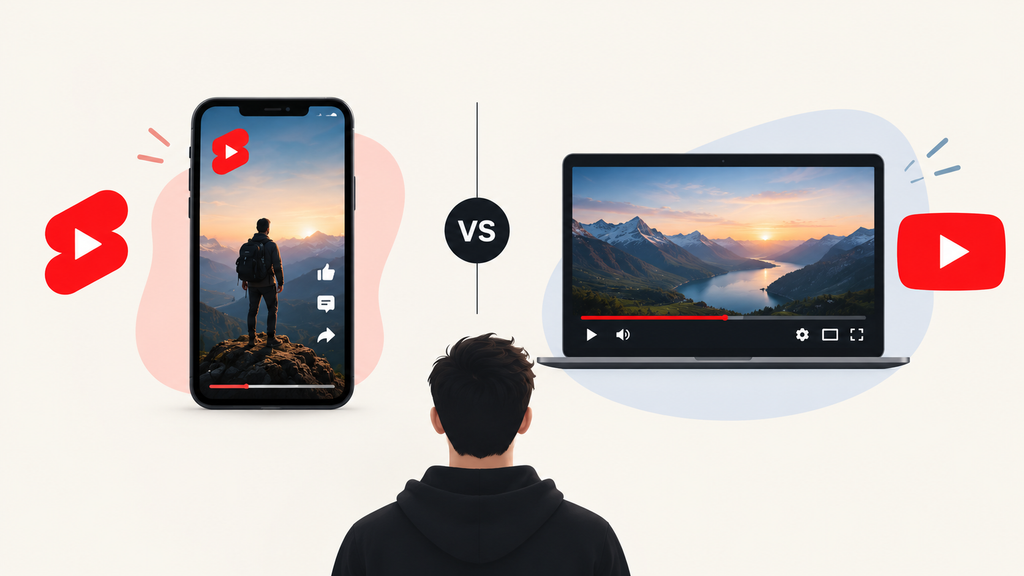
When you create a brand-new YouTube channel, you are instantly hit with one of the most critical dilemmas in the world of content creation.
That is, should you focus on ‘YouTube Shorts’ or traditional ‘Long-form Videos’?
On one side, you see creators gaining 100,000 subscribers in a month entirely through vertical, 30-second clips.
On the other side, you see established educators and storytellers building multi-million-dollar businesses off the back of 15-minute deep-dives.
For a new creator with zero audience, zero authority, and limited time, choosing the wrong path can lead to frustration due to lack of results and no growth.
Let’s break down how both formats work, how the algorithm treats them, and exactly which strategy you should focus on based on your goals.
1. YouTube Shorts: The Growth Engine

YouTube Shorts are vertical videos under 60 seconds that live in the dedicated Shorts Feed, mimicking the addictive swiping mechanics of TikTok and Instagram Reels.
The Pros:
Explosive Reach and Discovery: The Shorts algorithm is heavily recommendation-driven. A brand-new channel with zero subscribers can publish a Short and wake up to 50,000 views overnight because YouTube aggressively tests content on fresh audiences.
Low Production Barrier: You don’t need a professional camera studio or hours of intricate timeline editing. A smartphone, clear lighting, and a sharp hook are all you need to get started.
Rapid Subscriber Growth: Viewers can subscribe with a single tap directly inside the Shorts feed, making subscriber acquisition exponentially faster compared to long-form video.
The Cons:
Low Ad Revenue (RPM): Shorts monetization pays significantly less per 1,000 views than long-form content. Even millions of Shorts views can translate to very modest AdSense payouts. Basically youtube shorts and ad revenue don’t go hand in hand.
Low Audience Loyalty: A subscriber gained from a viral 15-second comedy clip or life hack is rarely invested in you as a creator. They subscribed for the specific video, not your channel, leading to low view counts when you pivot or post other content.
The “Shorts Trap”: Mixing massive numbers of low-retention Shorts subscribers with long-form content can confuse the algorithm and ruin your channel’s overall viewer engagement metrics.
2. Long-Form Content: The Authority Builder

Traditional horizontal videos (anything over 3–5 minutes, stretching up to hour-long documentaries) are built for depth, search intent, and community loyalty.
The Pros:
Higher Ad Revenue & RPM: Long-form videos allow for mid-roll ads and attract higher-paying brand advertisers. The RPMs for long-form content in niches like finance, tech, and business can be 10x higher than Shorts.
Deep Connection and Trust: When a viewer watches you talk about a complex topic for 15 minutes, they develop genuine trust. This makes long-form viewers far more likely to buy your digital products, click on affiliate links, or join your private membership.
Evergreen Search & Suggested Traffic: Long-form videos rank on Google and YouTube search for years. A single well-optimized video can generate steady, passive views months or even years after publication.
The Cons:
The Cold-Start Problem: Getting your first 1,000 subscribers and 4,000 watch hours via long-form content is a slow, grueling uphill battle. The algorithm takes time to understand who wants to watch your content.
High Production Overhead: Writing scripts, recording clean audio, sourcing B-roll, and editing a polished 10-minute video can easily take 10 to 20 hours per upload.
3. How the Algorithm Views Both Formats
For years, mixing Shorts and Long-form content on the same channel was discouraged because the subscriber bases acted like two entirely different audiences.
However, YouTube has refined its system to better bridge the gap.
While Shorts feed viewers raw algorithmic impressions, long-form videos rely heavily on Click-Through Rate (CTR) and Average View Duration (AVD).
If your channel relies solely on Shorts, your audience expects fast-paced, instant gratification.
When you drop a 12-minute long-form video on that same audience, they often click away in the first minute, signaling to YouTube that your video is low quality.
4. Which Strategy Should You Focus On?
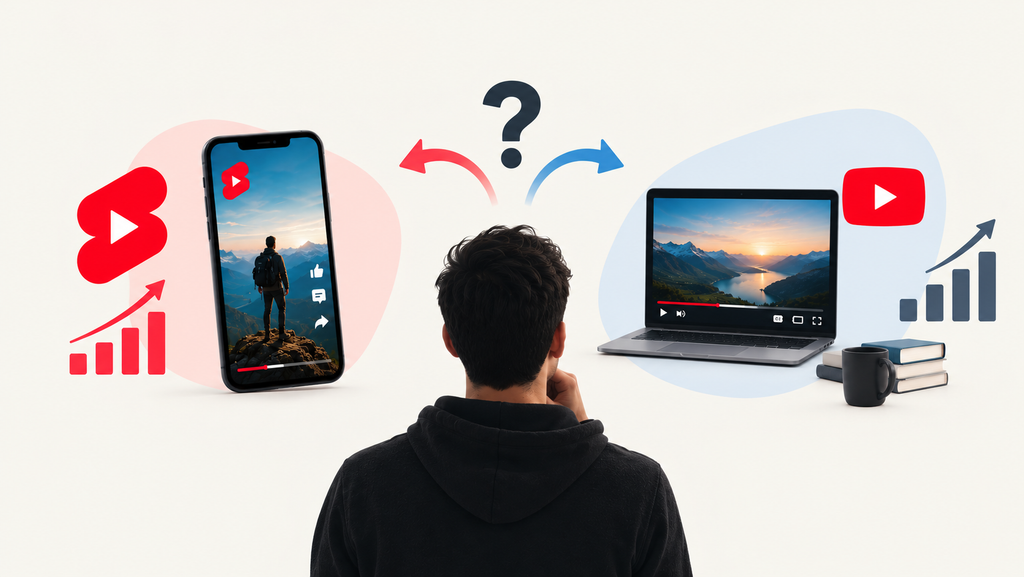
Your choice depends entirely on your primary goal as a creator:
Choose a “Shorts-First” Strategy If:
Your primary goal is rapid brand awareness, entertainment, or building a top-of-funnel audience for an external business (like fashion, comedy, or quick tips).
You want to test multiple niches quickly to see what sparks viewer interest before investing heavily in production.
Best Practice: Consider launching a separate channel for your long-form content after you have achieved the view target, subscriber base as desired. This will ensure that the people who like your shorts content and are interested in long-form videos in the particular niche only subscribe to the other channel.
This will keep your engagement metrics better as the interested people who have subscribed the long-form content channel will have a much higher AVD (Average view duration) signaling positive feedback to youtube’s algorithm.
Choose a “Long-Form-First” Strategy If:
Your goal is deep monetization, high-ticket affiliate marketing, consulting, or building a loyal niche community (e.g., coding, investing, in-depth tutorials, or long-form essays).
You want sustainable, high-paying ad revenue and evergreen search traffic from Day 1.
Best Practice: You can use Shorts strategically after you have established your core long-form identity, cutting highlights from your long videos to tease and drive traffic back to your main content.
This will keep your shorts videos relevant to your long-form content and the people who are genuinely interested to see the whole thing can become your additional loyal subscribers.
Final Thoughts
There is no single “correct” answer, only the strategy that aligns with your strengths and monetization goals.
If you have the patience and passion for storytelling, long-form content builds a lasting, highly profitable media business.
If you want fast momentum and high-energy audience testing, Shorts are unmatched.